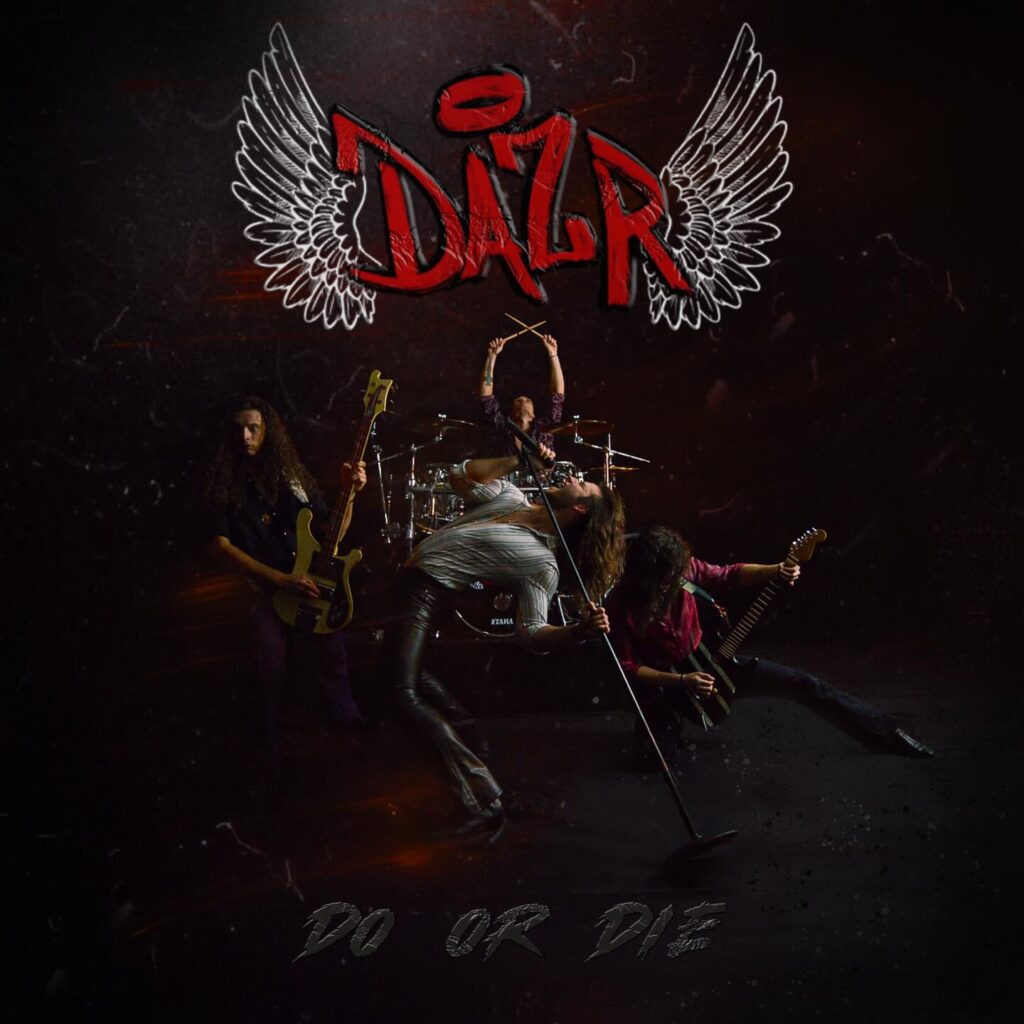
DÅZR (pronounced day-zer) Ignite the Melodic Hard Rock Fire with Hyper-Sonic Debut Album “Do or Die,” dropping on May 6th. The force that brought you the highly acclaimed single, “Can’t Take It Anymore,” introduces a brand-new debut album that combines the intensity of the live, Arena Show, with the melodies and precision of a finely tuned musical assault that hits all of the hot buttons.
The band offers some insight about the writing of the album:
“This record represents everything we’ve worked toward. It’s about pushing forward no matter what and giving everything we’ve got—”Do or Die” isn’t just the title, it’s the mindset behind the music.”
Coming in with a full-throttle introduction is the new Single, “Another Lie,” in which the band showcases the songwriting skill of a veteran act with the showmanship and energy that brings the audience to witness the power of a true, rock n’ roll experience. DÅZR’s signature blend of modern hard rock energy, melodic hooks, and emotionally driven songwriting are showcased across the album.
One of the true standouts is the aforementioned rock ballad “Can’t Take It Anymore.” Transcending the pinnacle of the late ’70’s thru the mid ’80’s sound, the song is refined and emotional, a true testament to the songwriting and the skillful musicianship that DÅZR possesses. Already garnishing high praise from the global music following, the single has amassed 430,000 views on YouTube, reflecting the band’s growing audience and organic fan support.
“Do Or Die” delivers a cohesive listening experience that reflects DÅZR’s dedication, intensity, and commitment to authentic rock music. From the melodies to the hooks to the driving riffs, there is something for everyone to enjoy.
Back Story:
DÅZR: No Apologies, No Backing Tracks
There’s a certain kind of musician who treats a band like a hobby — something to pick up and put down between classes, between shifts, between bouts of real life. Grant Hendrix is not that kind of musician.
When the Clemson University guitarist started sketching out what would become DÅZR in 2022, he wasn’t looking for weekend warriors or dorm-room jammers. He was looking for people who understood that building something real required the same unglamorous commitment as anything else worth doing. So he did what felt almost quaintly old-school in the age of Instagram DMs and Reddit posts: he made flyers. Actual paper flyers, tacked up around campus and dropped into the corners of the local scene like bait for a very specific kind of fish.
Dedicated players wanted. Serious only.
Most people scrolled past the idea before it even registered. A few laughed. One guy named Matthew Shranko (Shranko) picked up a flyer, read it twice, and made the call.
The first time Grant and Shranko plugged in together, something shifted in the room. Not in a lightning-bolt, movie-montage kind of way — more like the slow click of tumblers in a lock. Shranko’s bass playing had weight to it, a low-end authority that didn’t try to outrun the riff or disappear underneath it. He held the floor. Grant had been writing songs in his head for long enough that he knew immediately: this was the backbone the music needed. The two of them started building, rehearsal by rehearsal, riff by riff, two guys in a room figuring out the architecture of something that didn’t have a name yet.
But a band without a voice is just a rehearsal track. And finding the right voice — the one that could live inside the music Grant and Shranko were building rather than just sitting on top of it — turned out to be the part that took the longest.
Auditions happened. Singers came through, some with genuine chops, some with genuine delusion, most somewhere in between. Nothing clicked. The problem wasn’t always technical — it was something more elusive, the difference between a voice that performs a song and one that means it. Grant and Shranko kept returning to the same room, the same riffs, the same unfinished business.
The answer, when it finally arrived, came from the most unexpected and maybe most obvious place in the world.
Austin Hendrix had been around music his entire life the way some people are around weather — constantly present, never the thing itself. Grant’s younger brother had absorbed years of watching, listening, existing adjacent to the obsession. But fronting a band? That was someone else’s job, someone else’s risk.
After weeks of convincing, Austin finally agreed to record an anonymous demo, a cover of Motley Crue’s “Too Young to Fall In Love,” for Grant to send to Shranko. Hearing the demo, Shranko wasn’t sure, said he couldn’t really hear the singer, because he was singing with the song, until Grant told him it was a backing track and the voice he was hearing was the singer, his brother, Austin!
It was the voice they’d been looking for. Austin’s voice had a rawness that matched the riffs, a quality that felt lived-in rather than performed. It wasn’t studio-polished or technically showboating — it was direct. Human. The kind of voice that sounds better in a sweaty club at midnight, or in an arena of thousands, than it does on a laptop speaker, which, as it happens, is exactly the kind of voice DÅZR needed.
There’s something almost mythologically rock ‘n’ roll about a band anchored by brothers — the shared bloodline that makes the creative tension a little sharper and the loyalty a little deeper. The Kinks. The Everlys. The Van Halens. Not that DÅZR is chasing any ghosts, but the dynamic between Grant and Austin gives the band a center of gravity that’s hard to manufacture and impossible to fake. Grant builds the architecture; Austin inhabits it. The guitar and the voice don’t just coexist — they argue and agree in the same breath.
The core was set. Now they needed the engine.
It was two and a half years, over 250 gigs and two drummers later that Shalor O’Bryant walked into his audition and answered every unspoken question at once. It seems third time really is the charm.
There’s a version of a drummer who technically knows what they’re doing — hits the right marks, keeps serviceable time, doesn’t embarrass themselves. And then there’s the version that makes everyone else in the room suddenly play better without quite knowing why, a drummer that is all “ass and elbows.” Shalor is the second kind. His playing had a physicality and a consistency that didn’t waver — he hit hard, he hit clean, and when he locked in with Shranko’s bass, the whole bottom end of the band stopped being a foundation and started being a force.
Suddenly, like a classic muscle car, DÅZR was firing on all cylinders.
Here’s what DÅZR decided early, and what they’ve never wavered on: no backing tracks, no autotune, no production padding to paper over the cracks. Just guitars, bass, drums, and a voice. Four people, four instruments, no safety net.
In an era where half the “bands” on festival lineups are essentially one person and a laptop triggering samples while three hired hands mime enthusiasm behind them, this is a position that feels almost radical. But for DÅZR, it wasn’t a manifesto or a marketing angle — it was simply the only approach that felt honest, authentic. The music had to work in a room with four human beings playing it, or it didn’t work at all.
Rehearsals ran long and ran often. Songs weren’t written so much as forged — beaten into shape through repetition and argument and the particular alchemy that happens when four people play the same passage a hundred times and it suddenly becomes something none of them could have planned. Early cuts like “Night Lady,” “Can’t Take It Anymore” and “Hold The Line” started emerging from the haze, each one built around riffs that had actual vertebrae, melodies you could grab onto and not let go of. This wasn’t art-rock abstraction or processed-to-death studio product. This was raw, hard rock, with its boots on the floor and its volume at an impolite level of eleven.
The live shows came next — or rather, the live shows became the real rehearsal. Playing in front of people changes music in ways that no amount of isolated practice can replicate. You find out fast which parts of a song actually land and which parts are you convincing yourself it works. DÅZR tightened everything in real time, on stage, in front of real bodies in real rooms, the kind of trial-by-fire that either breaks a band apart or welds it into something that can’t be shaken loose. Loud, sweaty venues and beyond. Ringing ears at the end of the night. The satisfaction of driving home knowing you did exactly what you set out to do, break some hearts and melt some faces!
The name. Right. People always ask about the name.
DÅZR (pronounced day-zer)
The origin of the name DÅZR is sooo Rock N Roll! It was graffiti spotted at a gas station by Grant and Austin. Added wings and a halo and, not only did they have a cool band name, they had a classic hard rock logo.
What DÅZR is building right now isn’t a hype campaign or a carefully sequenced rollout. It’s something simpler and harder: a reputation. The kind that gets built one set at a time, one new listener at a time, by playing the same way, whether there are thirty people in the room or thirty thousand in a stadium. After opening for L.A. Guns at the legendary Whisky A-Go-Go 2025 New Year’s Eve, and a mini-tour with Lynch Mob two months later, DÅZR’s momentum is blowing up like a Marshall stack on overload.
New music is in the works. The same philosophy applies — songs that earn their place by working live, by hitting hard without apology, by trusting that a great riff played by real people in a real room still means something in whatever year it happens to be. The shows are getting louder. The rooms are getting fuller.
Grant Hendrix put up a flyer because he wanted to build something serious. Matthew Shranko answered it. Austin Hendrix stepped up when it mattered. Shalor O’Bryant walked in and locked everything down.
Four people. Four instruments. No apologies.
DÅZR is already happening. The rest of you are just catching up.
Pre-Order Link ” Do Or Die” Vinyl
https://www.thebanddazr.com/product-page/d%C3%A5zr-do-or-die-debut-vinyl-album
Pre-Order Link : “Do Or Die” CD
https://www.thebanddazr.com/product-page/d%C3%A5zr-do-or-die-cd
Pre-Save Link Spotify/Apple Music
https://tinyurl.com/2vn8ax6
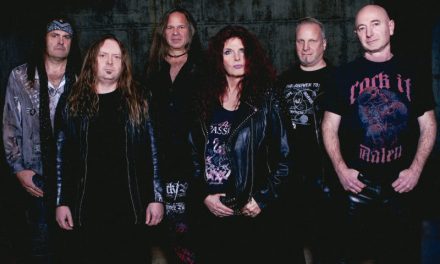
Lineup:
Austin Hendrix – Vocals
Grant Hendrix – Guitar
Matthew Shranko – Bass
Shalor O’Bryant – Drums
Produced by: DÅZR, LLC
Recorded At: The Jam Room, Columbia, SC
Tour: https://www.thebanddazr.com/tour
Booking Information:
Halo Artist Management
info@haloartistmanagement.com